
Skip to content

U-Connect Blog

Screenshot 2026 08 14 at 4.16.02 pm

Recruitment Is Broken. So Why Are Companies Still Hiring the Same Way?

For years, the recruitment process has followed a familiar formula:
Post a job. Review resumes. Conduct interviews. Make an offer. Hire.
Simple, right?

Then why are so many companies still struggling to find the right people?
The problem may not be the lack of talent. It may be the way companies are looking for it.

The workplace has changed. Technology has changed. Candidate expectations have changed. Even the way people apply for jobs has changed.
Yet many companies are still relying on recruitment strategies built for a very different workforce.
Photo 1698047681432 006d2449c631?ixid=m3w1nzq5otv8mhwxfgfsbhx8fhx8fhx8fde3odgzndg2mtr8&ixlib=rb 4.1

The Resume Doesn't Tell the Whole Story

A resume can tell you where someone has worked and what they claim to have done.
But it doesn't always tell you whether they can actually succeed in the role.

This is one reason skills-based hiring is becoming increasingly important.
Instead of focusing entirely on degrees, job titles and years of experience, companies are beginning to look more closely at what candidates can actually do.

A candidate may not have followed the traditional career path but could have exactly the skills your business needs.
Photo 1694903089438 bf28d4697d9a?ixid=m3w1nzq5otv8mhwxfgfsbhx8fhx8fhx8fde3odgzndg3nzv8&ixlib=rb 4.1

AI Is Changing the Recruitment Game

Artificial intelligence is creating opportunities for recruiters, but it is also creating new challenges.
Companies can use AI to screen applications, identify potential candidates and automate repetitive tasks.

Candidates, meanwhile, can use AI to write resumes, tailor applications and produce polished cover letters in seconds.

That means a perfectly written application doesn't necessarily mean a perfectly qualified candidate.
Modern talent acquisition therefore requires more than keyword matching.
Skills assessments, structured interviews, work samples and proper candidate evaluation are becoming increasingly important.

AI can make recruitment faster.
But human judgment still matters.
Photo 1621060344848 262c81b806a2?ixid=m3w1nzq5otv8mhwxfgfsbhx8fhx8fhx8fde3odq4mta4mdz8&ixlib=rb 4.1

Great Candidates Don't Wait Around

There is another problem with traditional recruitment: it can be painfully slow.

A strong candidate may be interviewing with three companies at the same time. If your hiring process takes six weeks while another company makes an offer in two, you may lose them.
This makes speed an important part of modern recruitment strategies.
But faster isn't always better.

A company that hires quickly but hires the wrong person hasn't solved its recruitment problem.
The real goal is to create a process that is both efficient and effective.
Photo 1762330463209 825488c52272?ixid=m3w1nzq5otv8mhwxfgfsbhx8fhx8fhx8fde3odgzndkwodr8&ixlib=rb 4.1

Are Companies Looking in the Same Places?

Many businesses rely on the same job boards, LinkedIn searches and recruitment channels.

There is nothing wrong with these platforms, but they represent only part of the available talent pool.

Some of the strongest candidates may not be actively applying for jobs at all.
This is where proactive sourcing, employee referrals, talent communities and targeted recruitment can make a difference.

Sometimes the answer isn't finding more candidates.
It's finding different candidates.
Photo 1723095469034 c3cf31e32730?ixid=m3w1nzq5otv8mhwxfgfsbhx8fhx8fhx8fde3odgzndkymdr8&ixlib=rb 4.1

The Cost of Getting It Wrong

The pressure to fill vacancies can cause companies to focus heavily on how quickly they can hire.

But the more important question may be:

Did we hire the right person?
A poor hire can affect productivity, team morale, customer experience and employee retention.
It can also mean starting the recruitment process all over again.

That is why companies should think beyond simply filling vacancies.
A strong recruitment process should focus on quality of hire, not just time-to-hire.
Screenshot 2026 09 02 at 4.41.31 am

Recruitment Needs to Become a Business Strategy

Recruitment shouldn't only start when someone resigns.

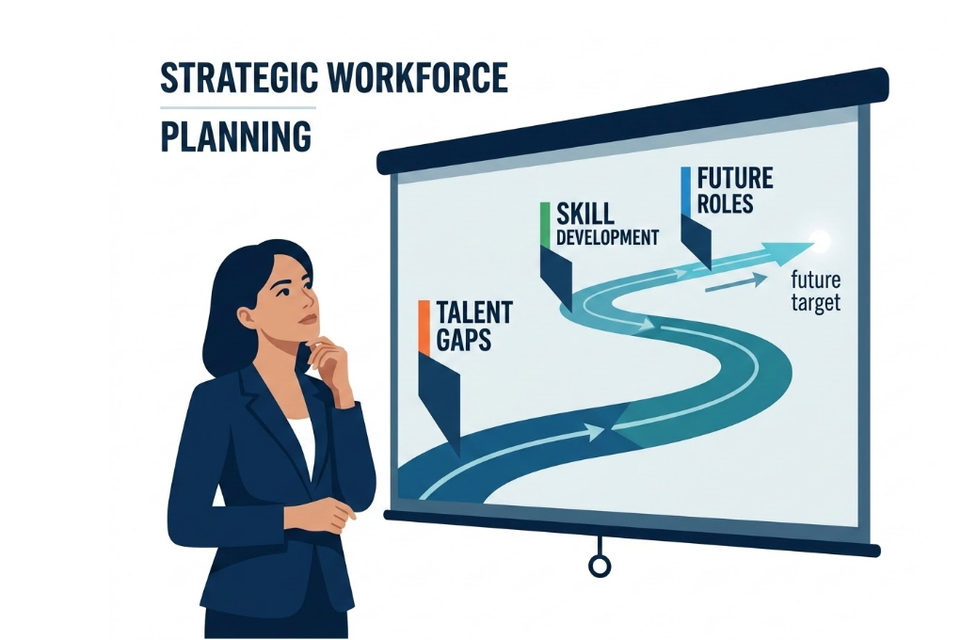
Companies need to think about workforce planning before they have an urgent vacancy.

What skills will the business need next year?

Which roles will become difficult to fill?
Where are the current talent gaps?
Could existing employees be developed instead of hiring externally?
When does it make sense to use recruitment services or recruitment process outsourcing?

These are business questions, not simply HR questions.